

How to design a high-performance home gym in a small space – without sacrificing style
Share
By PIVOT, British-engineered creators of the patented bed that transforms into a commercial-grade gym in seconds.
Designing a home gym in a compact space is no longer a compromise, it’s a mark of smart, modern living. As homes evolve and wellness becomes woven into everyday life, more people are discovering that a beautifully designed small space gym can outperform a traditional room-filling setup.
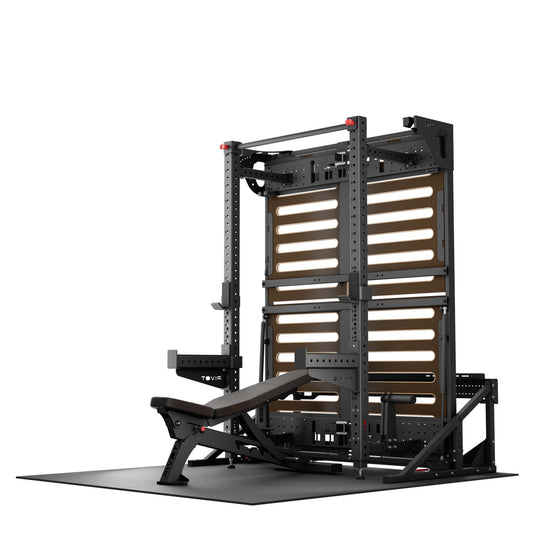
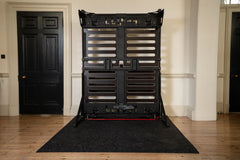
Today’s innovations, particularly transforming fitness furniture and compact strength equipment, make it possible to integrate a premium training environment seamlessly into your home, without losing the aesthetic integrity of the space. For many, this shift means no more bulky racks living in the corner of the living room (see photo) and no more dedicating an entire room to a static gym that sits unused half the week.
In this guide, we break down how to create a high-performance, design-led, space-optimised training environment in any home, from micro apartments to townhouses to modular living spaces.
Why small-space home gyms are redefining modern wellness
The rise of compact, high-performance equipment
In the past, serious training at home required large machines, heavy racks and a room dedicated exclusively to fitness. Today, engineering advancements have turned this assumption on its head. Compact systems now provide the same — or better — performance as their oversized predecessors.
Adjustable weights deliver full progressive overload without taking up metres of wall space. Foldable benches offer the stability of a commercial bench but tuck away after use. Transforming systems like the PIVOT Bed bring commercial-grade training capability to spaces where a traditional gym could never fit.
Homeowners now have access to strength, conditioning, mobility and cardio training options that respect their square footage and complement their interior design.
Convenience that transforms consistency
For most people, the single biggest barrier to regular training isn’t motivation — it’s friction.
A small home gym eliminates:
The commute
No travelling to a commercial gym, no parking, no scheduling around traffic.
Waiting for equipment
You decide the flow, speed and structure of your sessions. No sharing. No delays.
Crowded spaces
Your gym becomes an oasis: clean, personal and predictable.
Restricted opening hours
You can train early, late, for 10 minutes or for an hour — entirely on your terms.
This reduction in friction enhances consistency, which is ultimately the foundation of physical change, mental clarity and long-term health.
Small footprint, full performance
Compact gyms now support every major training modality. With the right equipment, small rooms can deliver:
Strength training
From presses and deadlifts to split squats and rows, adjustable dumbbells and transforming systems provide all the load variety required for progression.
Bodyweight training
Space-efficient setups are ideal for calisthenics progressions, core work and movement flows.
Interval training
Whether you prefer EMOMs, HIIT or functional circuits, small spaces can deliver high-intensity sessions without compromise.
Steady-state cardio
Walking pads and compact bikes provide low-impact conditioning without dominating the room.
Mobility & recovery
A mat, roller and consistent practice can transform posture, flexibility and relaxation.
The modern small home gym is not a limitation — it’s a capability.
Space-saving home gym ideas for every home
Whether you’re designing a gym inside a guest room, studio apartment or multifunctional space, the goal is always the same: to create a beautiful, efficient, high-performance environment that elevates the way you live.
Choose multifunctional equipment with a minimal footprint
In small spaces, efficiency is everything. The most valuable pieces of equipment are those that deliver the greatest variety of exercises while occupying the least amount of room.
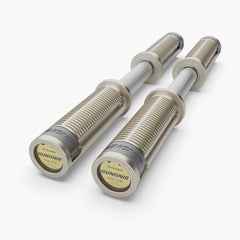
Adjustable dumbbells
These replace entire walls of fixed-weight dumbbells. A single pair often covers a range from beginner sets to heavy training loads. They support virtually every movement pattern — presses, rows, squats, hinges and carries — while requiring only a fraction of the space.
Resistance bands
Bands offer variable resistance, making them ideal for strength work, mobility, prehab, active recovery and joint-friendly sessions. They store in a drawer yet dramatically expand training versatility.
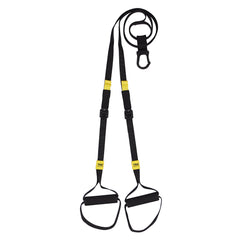
Suspension trainers
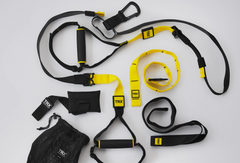
Mounted to a door or ceiling beam, these enable full-body strength and stability work. They shine in small spaces because they require almost no footprint yet support a huge range of pulling, pushing and core movements.
Foldable workout benches
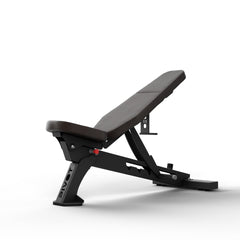
A stable bench unlocks presses, step-ups, rows and countless variations. Modern foldable benches collapse flat and can store vertically behind a door — offering commercial-level stability without permanent presence.
Compact cable systems
Wall-mounted units provide pulldowns, rows, pushes, curls, rotations and more. They are among the most versatile tools in any gym, yet modern designs require just a small patch of wall space.
Transforming strength units
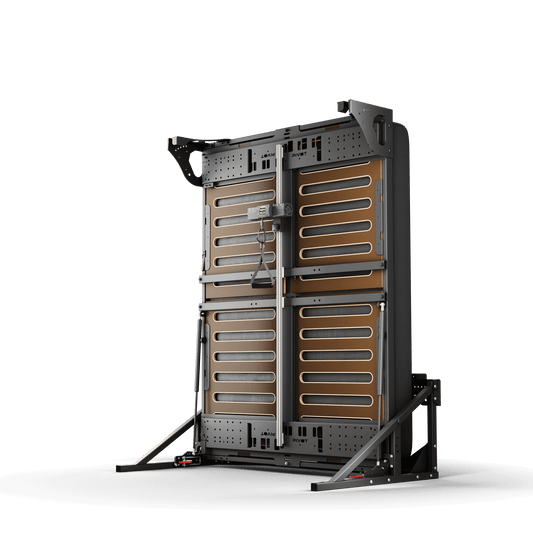
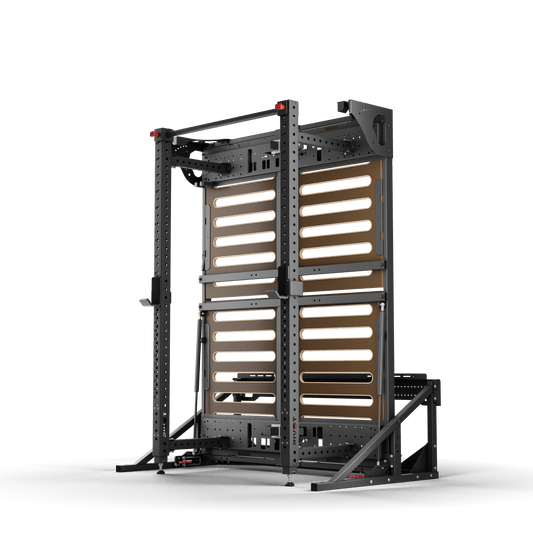
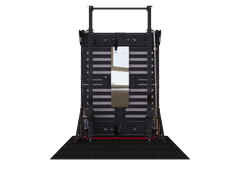
This is where innovation accelerates. Beds, cabinets and desks that convert into gym stations deliver true dual-purpose living. The PIVOT Bed, for example, transitions from premium furniture into a commercial-grade strength system in seconds — a complete gym that occupies no visible footprint in everyday use.
The more multifunctional your choices, the more open and refined your home will feel.
Think vertically — walls are your most valuable asset
When floor space is limited, vertical planning becomes a core design principle.
Wall-mounted dumbbell storage
This elevates weights off the floor and onto the wall, creating visual order and preserving square footage.
Pegboards for accessories
Too often, bands and smaller tools clutter drawers or live on the floor. Pegboard systems display these items neatly, turning functional equipment into a design element.
Over-door pull-up bars
These allow powerful upper-body strength work without requiring permanent structural changes or floor-mounted equipment.
Narrow shelving for small items
Massage tools, timer blocks, mats and micro-accessories fit elegantly on slim shelves, keeping the space decluttered.
Mounted compact cable stacks
Instead of a heavy machine on the floor, wall-mounted cables deliver versatility while maintaining openness.
Hooks for mats and bands
Hanging equipment vertically keeps it dry, accessible and out of the way.
This approach creates an environment that feels airy, intentional and beautifully organised.
Use transforming and hidden fitness furniture
One of the biggest advancements in the home fitness category is the emergence of high-performance equipment that disguises itself as everyday furniture.
Foldaway squat racks
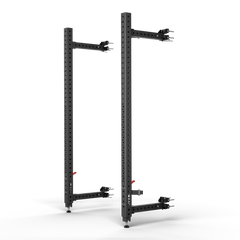
These mount discreetly to walls and unfold only when needed, enabling serious barbell work in rooms that were never designed for it.
Walking pads that slide under the sofa
Perfect for active recovery and daily steps, these disappear entirely after use.
Ottomans that double as benches
Furniture pieces now offer built-in stability, giving users a two-in-one solution for decor and training.
Wall-folding workout stations
These systems collapse flat against the wall, transforming a living area into a training studio and back again.
Beds that become full-strength systems
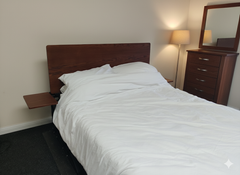
The PIVOT Bed exemplifies the future: a luxury piece of furniture that converts into a commercial-grade gym. It removes the need for a dedicated room entirely and integrates seamlessly into design-led homes.
This category is central to the next generation of urban living.
Create a boutique micro-training zone
Even a single corner can feel like a private studio with the right approach.
Start with a premium mat
This sets a defined training boundary and instantly elevates the mood.
Add soft, directional lighting
Warm, low-glare lighting makes small spaces feel calm and purposeful. It enhances focus and reduces visual noise.
Use a mirror to expand the space
Mirrors amplify both light and perceived size. They also support proper form during movement.
Curate minimal, purposeful shelving
One or two shelves with essential items — nothing more — maintains cleanliness and order.
Choose a calming palette
Soft neutrals or muted tones allow the mind to settle and create a sense of serenity.
This micro-zone becomes an anchor — a space that invites movement and reduces barriers to starting your session.
What to look for when selecting equipment for a small home gym
Small-space gyms require thoughtful selection based on four principles:
Versatility
Equipment should support multiple exercises and training styles: strength, conditioning, mobility, stability and flow. The goal is maximum utility per square inch.
Compactness
Look for items that fold, stack, slide or store cleanly. The best pieces disappear entirely when you’re not using them.
Durability & performance
Compact does not mean lightweight or weak. Choose equipment built from robust materials with high load tolerance to ensure years of reliable use.
Aesthetic harmony
Your home gym should complement your interior design, not conflict with it. Modern pieces blend seamlessly into contemporary spaces.
The best space-saving equipment for a high-performance small home gym
Adjustable dumbbells
These are the foundation of most small home gyms. They offer progressive load, easy transitions between exercises and versatility for everything from hypertrophy to conditioning.
Resistance bands
Lightweight, compact and budgetless in terms of storage, bands expand your range dramatically — especially for mobility and accessory work.
Foldable workout bench
An essential companion to adjustable dumbbells. Choose one with minimal wobble, heavy load capacity and a folding mechanism that stores vertically or flat.
Slimline walking pads
Perfect for low-impact cardio or all-day step accumulation. Their ultra-thin profile means they slip under beds or sofas effortlessly.
Compact cable machines
These offer unmatched versatility — rows, presses, curls, rotations, pulldowns — in a wall-mounted footprint that preserves floor space.
Transforming bed-to-gym systems
The pinnacle of modern fitness innovation. The PIVOT Bed demonstrates how a piece of premium British-built furniture can house a complete strength-training solution. This eliminates the need for a separate gym room entirely.
How to layout your small home gym for maximum impact
Keep the centre clear
The middle of the room should remain open for mobility work, core training, warm-ups, cool-downs and dynamic movement.
Use light colours and mirrors
Light tones reflect and amplify natural light, making compact rooms feel significantly larger.
Build intelligent storage
Think drawers, vertical racks, hidden compartments and multifunctional furniture. Clean lines elevate both form and function.
Choose high-value accessories
A few well-chosen items outperform shelves of unused tools. Prioritise quality over quantity.
Prioritise flooring
Good flooring protects joints, reduces noise and preserves your home’s surfaces — especially important in flats or multi-level homes.
How to train effectively in a small home gym
Strength Training
Use adjustable dumbbells, a bench and a transforming system to programme squats, presses, rows, hinges and unilateral work. These patterns form the backbone of an effective strength routine.
Cardio & Conditioning
Walking pads, compact bikes and timed interval circuits provide powerful cardiovascular benefits without requiring a large footprint.
Mobility & Recovery
A mat and a few minutes of focused breathwork or stretching can transform posture, reduce stiffness and enhance training longevity.
The future of small-space fitness
Homes are becoming smarter, more efficient and more wellness-oriented. Expect:
- Furniture that transforms into fitness systems
- High-performance equipment that stores invisibly
- Greater integration between interior design and training
- Compact strength systems engineered for professional performance
This is precisely where PIVOT sits: engineering the next era of small-space fitness.
Final thoughts: A dream home gym doesn’t require a spare room
With thoughtful planning, multifunctional equipment and modern innovations like the PIVOT Bed, you can create a small home gym that is:
- High-performance
- Beautifully designed
- Space-efficient
- Built around the way you actually live
Your dream gym can exist anywhere — even in the space you already have.